.JPG)
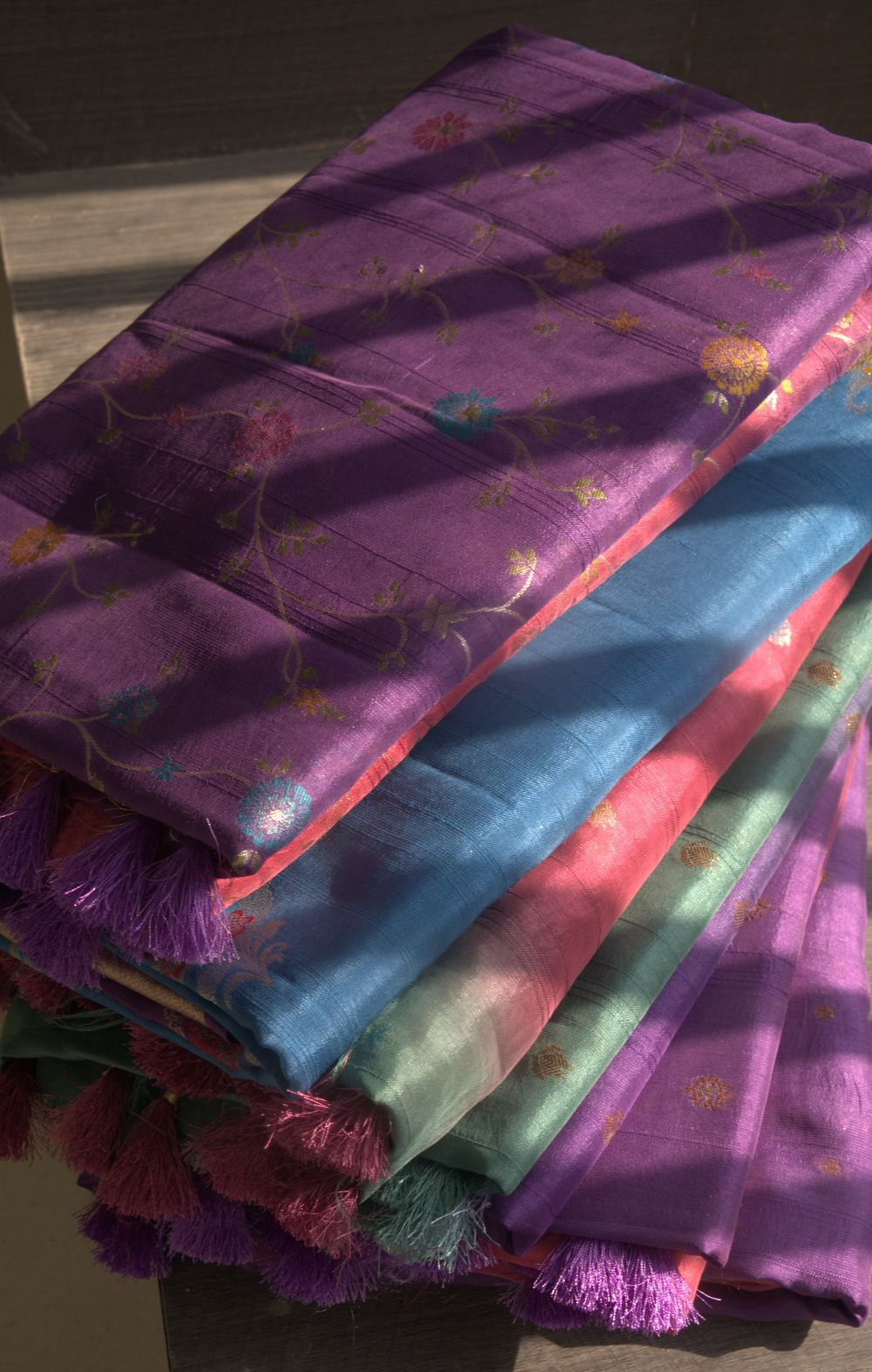
Banarasi sarees are not a single category.
They are a family of fabrics, weaves, and finishes, each created for a different purpose, season, and kind of occasion. Knowing the difference helps buyers choose the right saree for the right moment and build a wardrobe that actually gets worn.
At Loyal Sarees, these categories are developed and finished at our Varanasi unit under direct supervision. This allows us to maintain consistency in weaving quality, zari balance, and long-term wearability.
This guide explains the most important Banarasi saree types and when each one fits best.
1. Katan Matka Banarasi Saree
The Katan Matka Banarasi Saree uses tightly twisted silk yarns blended with the slightly textured matka finish. The fabric is strong, structured, and capable of supporting heavy zari designs.
Look & Feel
Firm body, rich surface, traditional presence.
When to Wear
Weddings
Bridal ceremonies
High-profile family events
Major religious functions
This is the most ceremonial category in the Banarasi family.
2. Abu Tai Silk Banarasi Saree
The Abu Tai Silk Banarasi Saree features a smooth silk base with dense, controlled weaving that holds elaborate patterns clearly.
Look & Feel
Elegant sheen, premium finish, strong drape.
When to Wear
Reception functions
Formal celebrations
Festive evenings
This category suits buyers seeking luxury without excessive weight.
3. Viscose Tussar Banarasi Saree
The Viscose Tussar Banarasi Saree recreates the appearance of tussar silk with a softer, more manageable texture.
Look & Feel
Soft, slightly matte, breathable.
When to Wear
Festive days
Daytime ceremonies
Office functions
Regular traditional wear
It balances visual richness with comfort for long hours.
4. Organza Satin Banarasi Saree
The Organza Satin Banarasi Saree combines a light organza base with a satin surface. This allows intricate zari work while keeping the saree lightweight.
Look & Feel
Crisp, luminous, modern.
When to Wear
Evening events
Wedding receptions
Formal celebrations
It delivers strong visual impact without heaviness.
5. Dola Georgette Banarasi Saree
The Dola Georgette Banarasi Saree uses twisted yarns to create a flowing base that carries Banarasi motifs comfortably.
Look & Feel
Soft drape, smooth movement, comfortable wear.
When to Wear
Long ceremonies
Family gatherings
Festive occasions
Ideal for extended wear without fatigue.
6. Crepe Georgette Banarasi Saree
The Crepe Georgette Banarasi Saree offers even more fluid movement with a slightly textured surface.
Look & Feel
Lightweight, breathable, graceful fall.
When to Wear
Parties
Evening functions
Office celebrations
A practical festive choice for modern wardrobes.
7. Chinon Banarasi Saree
The Chinon Banarasi Saree uses fine synthetic silk yarns with Banarasi weaving techniques.
Look & Feel
Feather-light, airy, contemporary.
When to Wear
Casual festivities
Day events
Summer functions
Perfect for younger buyers and daily festive wear.
Buyers who want deeper insight into weaving and production can also read our guide on how an original Banarasi saree is made to better understand the craftsmanship behind each type.
8. Kora Silk Banarasi Saree
The Kora Silk Banarasi Saree represents a traditional raw silk base historically used for structured Banarasi designs. Its qualities are closely related to the foundations seen in Katan and Organza weaving.
Best for: traditional ceremonies and daytime weddings.
9. Tissue Banarasi Saree
The Tissue Banarasi Saree is known for its metallic sheen created by blending zari with silk. This finish closely connects with the luminous effect seen in Organza Satin categories.
Best for: receptions and evening celebrations.
10. Cotton Silk Banarasi Saree
The Cotton Silk Banarasi Saree combines breathability with festive appearance. Its comfort profile aligns with lighter Banarasi categories such as Chinon and Georgette.
Best for: daily traditional wear and summer functions.
Choosing the Right Banarasi Saree
The right Banarasi saree depends on three simple factors:
• Event type
• Duration of wear
• Comfort requirement
Heavier categories like Katan Matka Banarasi Saree and Abu Tai Silk Banarasi Saree suit weddings and formal ceremonies. Lighter options like Organza Satin Banarasi Saree, Georgette Banarasi Saree, and Chinon Banarasi Saree work better for extended wear and modern functions.
At Loyal Sarees, each category is developed and finished under direct supervision at our Varanasi unit to ensure dependable structure, balanced zari application, and consistent quality.
Quick Comparison Guide
They are a family of fabrics, weaves, and finishes, each created for a different purpose, season, and kind of occasion. Knowing the difference helps buyers choose the right saree for the right moment and build a wardrobe that actually gets worn.
Firm body, rich surface, traditional presence.
Weddings
Bridal ceremonies
High-profile family events
Major religious functions
Elegant sheen, premium finish, strong drape.
Reception functions
Formal celebrations
Festive evenings
Soft, slightly matte, breathable.
Festive days
Daytime ceremonies
Office functions
Regular traditional wear
Crisp, luminous, modern.
Evening events
Wedding receptions
Formal celebrations
Soft drape, smooth movement, comfortable wear.
Long ceremonies
Family gatherings
Festive occasions
Lightweight, breathable, graceful fall.
Parties
Evening functions
Office celebrations
Feather-light, airy, contemporary.
Casual festivities
Day events
Summer functions
• Event type
• Duration of wear
• Comfort requirement
|
Saree Type |
Weight |
Best For |
Comfort Level |
Occasion Type |
|
Katan Matka |
Heavy |
Weddings |
Medium |
Grand ceremonial |
|
Abu Tai Silk |
Medium-Heavy |
Receptions |
Medium |
Formal celebrations |
|
Viscose Tussar |
Medium |
Day events |
High |
Festive, office |
|
Organza Satin |
Light |
Evenings |
Medium |
Receptions, parties |
|
Dola Georgette |
Light |
Long wear |
High |
Family functions |
|
Crepe Georgette |
Very Light |
Parties |
Very High |
Modern celebrations |
|
Chinon |
Very Light |
Casual wear |
Very High |
Day functions |
Common Mistakes Buyers Make While Choosing a Banarasi Saree
Many buyers focus only on how a saree looks in the showroom and forget to consider how long it will be worn, the season of the event, and the weight of the fabric. This often leads to discomfort during functions or a saree that gets worn once and then forgotten.
Another common mistake is assuming all Banarasi sarees are heavy. This causes people to miss versatile options like Organza Satin, Georgette, and Chinon that offer both comfort and tradition.
Choosing with purpose ensures better value and long-term satisfaction.
Final Thought
Banarasi sarees are not just garments. They are purpose-built traditions. When the fabric matches the occasion, the saree holds its form, feels comfortable for long hours, and looks right in every setting.
Understanding these differences allows buyers to invest in pieces that stay relevant in their wardrobe for years rather than seasons. Whether you are selecting for personal wear, boutique inventory, or ceremonial collections, choosing the correct Banarasi category transforms a saree from beautiful to dependable.
At Loyal Sarees, this clarity guides every stage of our production, from yarn selection to final finishing.
Choose the fabric wisely and the saree does the rest.
Frequently Asked Questions About Banarasi Sarees
1. How do I choose the right Banarasi saree for a wedding?
Focus on structure and fabric weight. Categories like Katan Matka and Abu Tai Silk provide the richness and stability required for long ceremonial wear.
2. Which Banarasi saree is best for long hours of wear?
Dola Georgette, Crepe Georgette, and Viscose Tussar are designed for comfort while maintaining traditional aesthetics.
3. Are lightweight Banarasi sarees suitable for formal events?
Yes. Organza Satin and Chinon Banarasi sarees provide strong visual presence with lighter construction.
4. How should a Banarasi saree be stored for long-term use?
Store in breathable cotton cloth, avoid plastic covers, keep away from moisture, and refold every few months.
5. Why does the same Banarasi saree look different across sellers?
Differences come from yarn quality, zari composition, weaving density, and finishing standards.
Recent Post
April 4, 2025
April 4, 2025
April 4, 2025