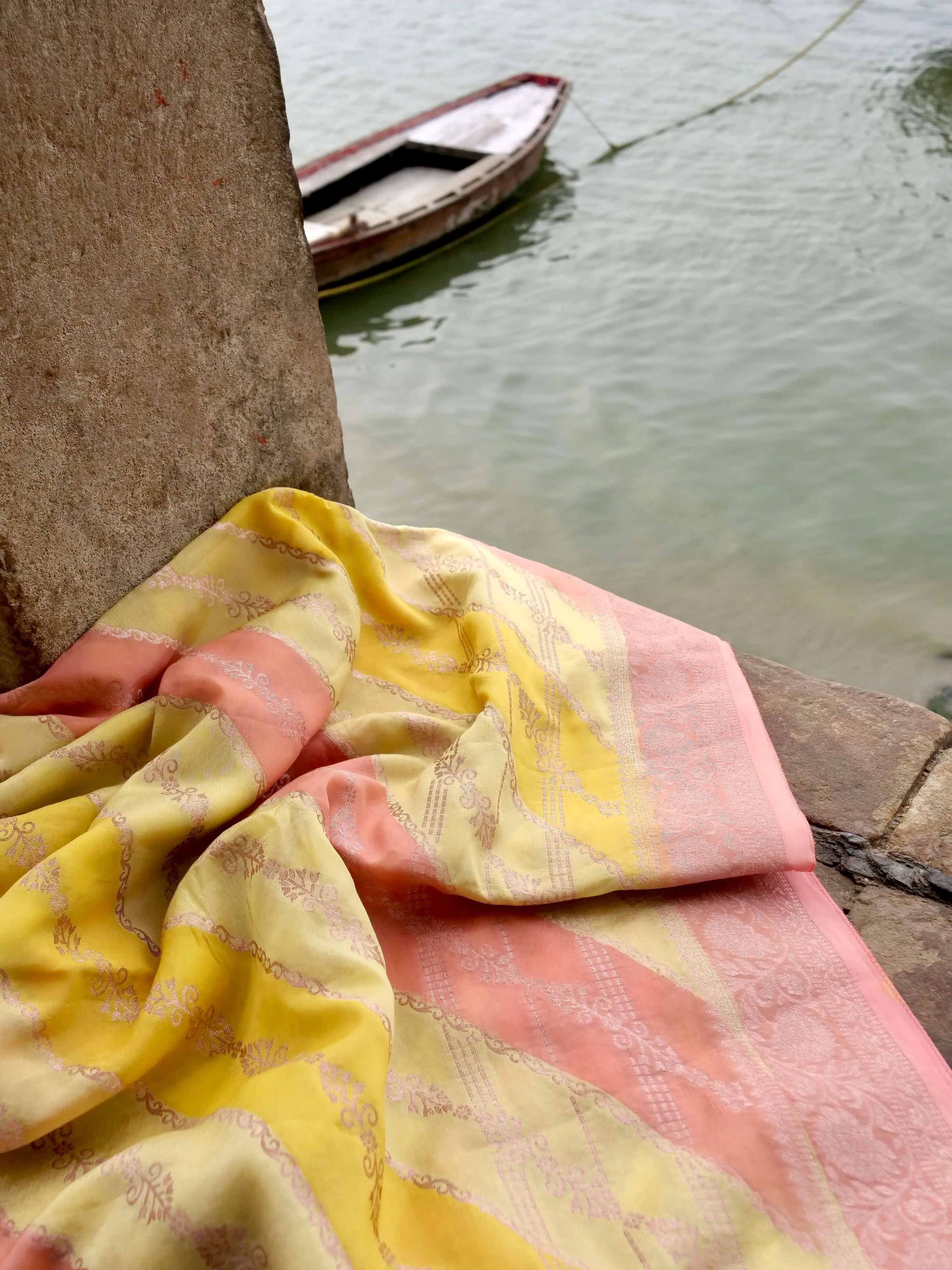
If you have ever held an original Banarasi saree in your hands, you probably noticed it feels different even before you look at it closely. The weight settles in a certain way. The surface feels calmer. The shine behaves differently from most fabrics. That difference does not happen by chance. It comes from how the saree is made, from the very first thread.
Knowing this process does more than satisfy curiosity. It changes how you judge a saree. It explains why two sarees that look similar on a shelf can feel completely different once you wear them. And once you understand that, choosing becomes simpler and more confident.
Here is how an original Banarasi saree is actually made in Varanasi, step by step.
1. It All Starts With the Silk
Everything begins with the yarn. For traditional Banarasi sarees, natural silk remains the base of the fabric. The quality of this silk decides almost everything that follows: the fall of the saree, the softness on the skin, the way light reflects on the surface, and how well the fabric holds up over time.
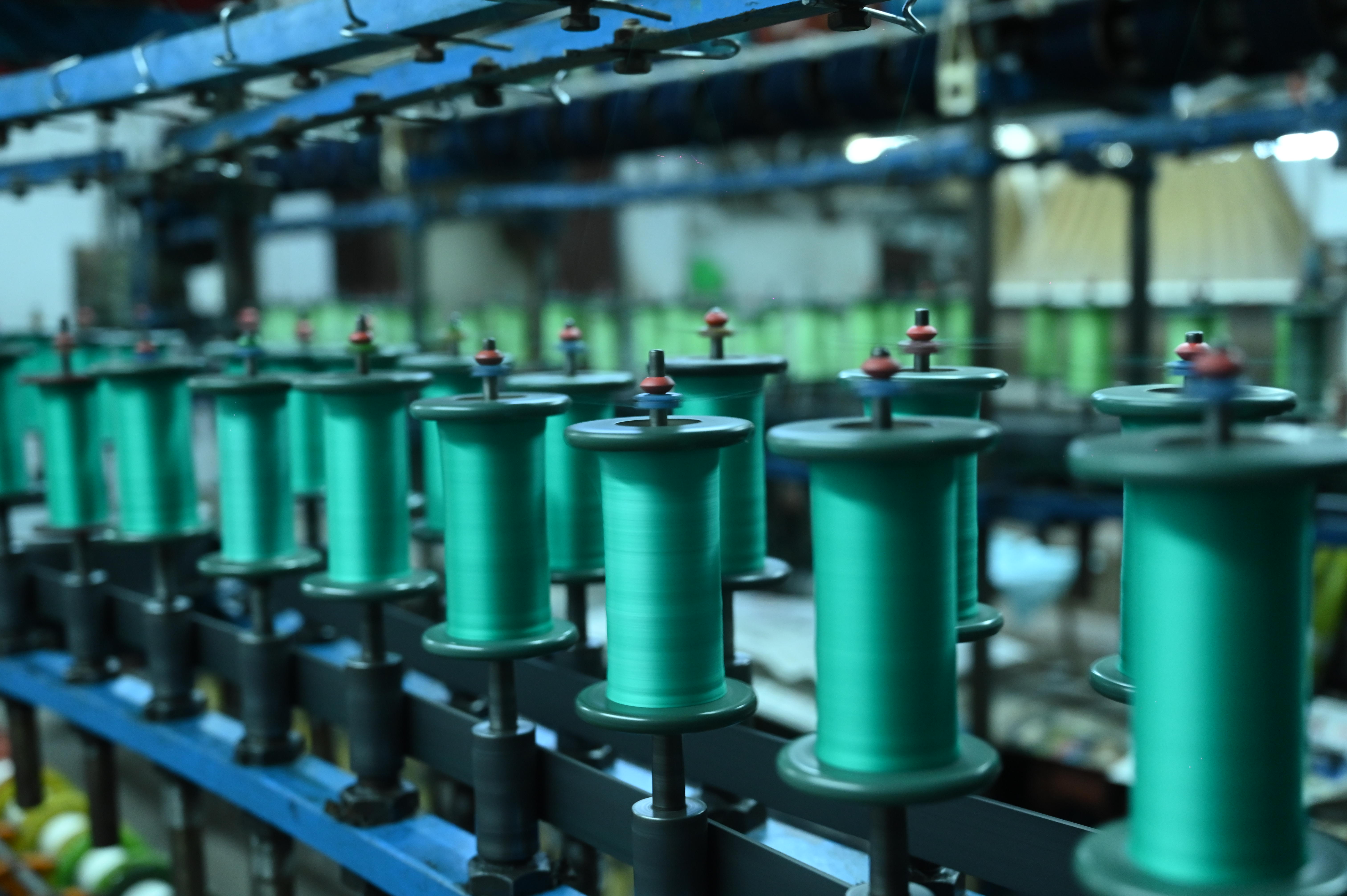
Raw silk is cleaned and then twisted into threads. This twisting is important. It gives silk its strength and that steady, quiet shine Banarasi sarees are known for. When silk quality is poor, the signs appear quickly. The fabric feels weak, the shine looks uneven, and the saree begins losing its character far sooner than it should.
That is why serious Banarasi weaving always starts with careful silk selection. This is the same approach you will notice in well-made Banarasi Silk Sarees, where the fabric itself already tells half the story.
2. Designing Comes Before Weaving
Before a loom is touched, the design is planned. This stage takes time and patience. The main motif, the border, the pallu design, the placement of zari, and the overall balance of the saree are all decided in advance.
Earlier, this work was done entirely on graph paper. Many workshops still do it that way. Some now use software to improve accuracy, but the creative judgment remains the same. It comes from years of experience and a deep understanding of what looks right on fabric.
A complex design can take days, sometimes weeks, before the weaver is even ready to begin.
3. Setting the Loom
Once the design is approved, the loom is prepared. This is one of the most important stages, though it rarely gets attention outside the weaving rooms.
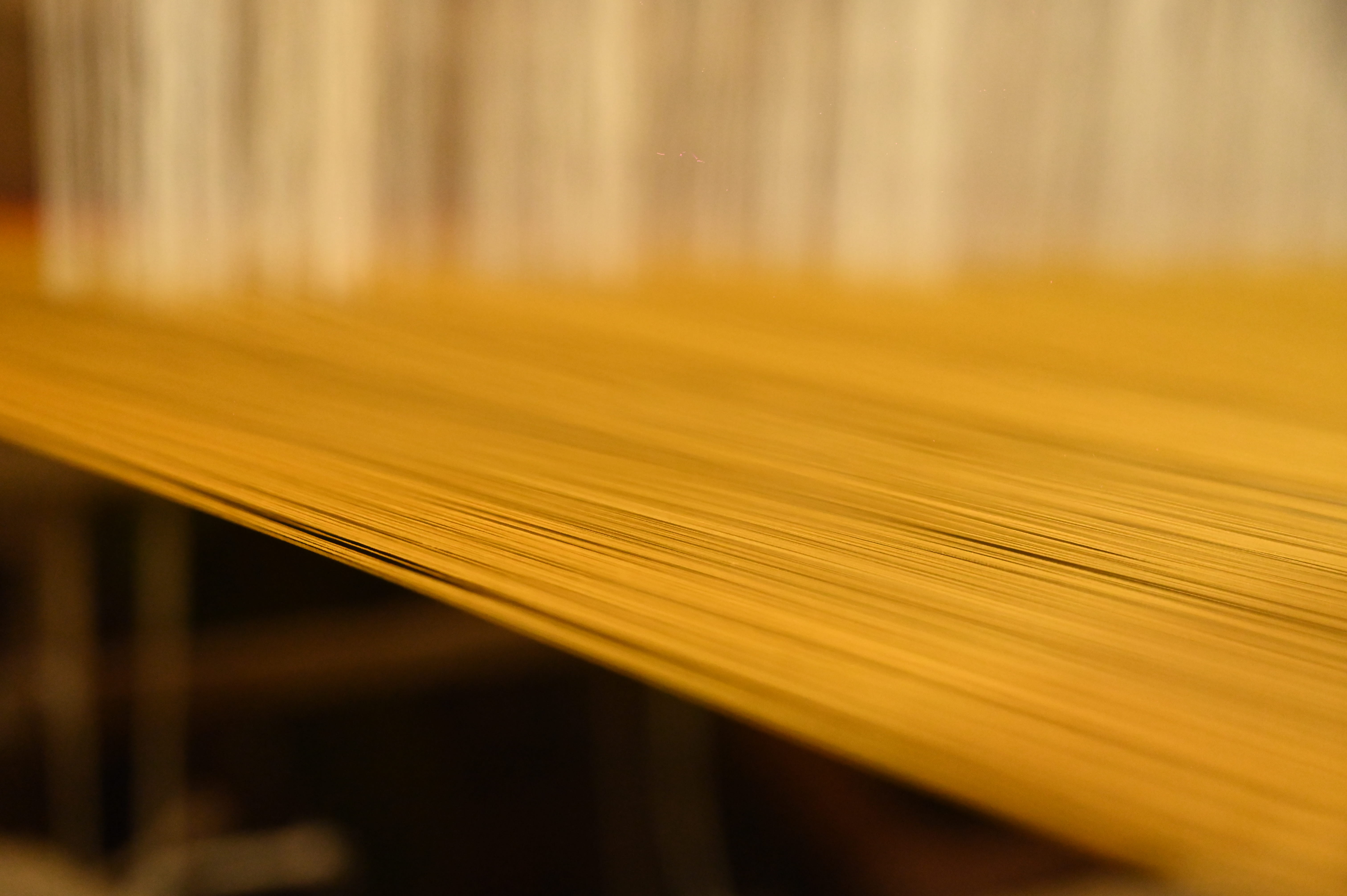
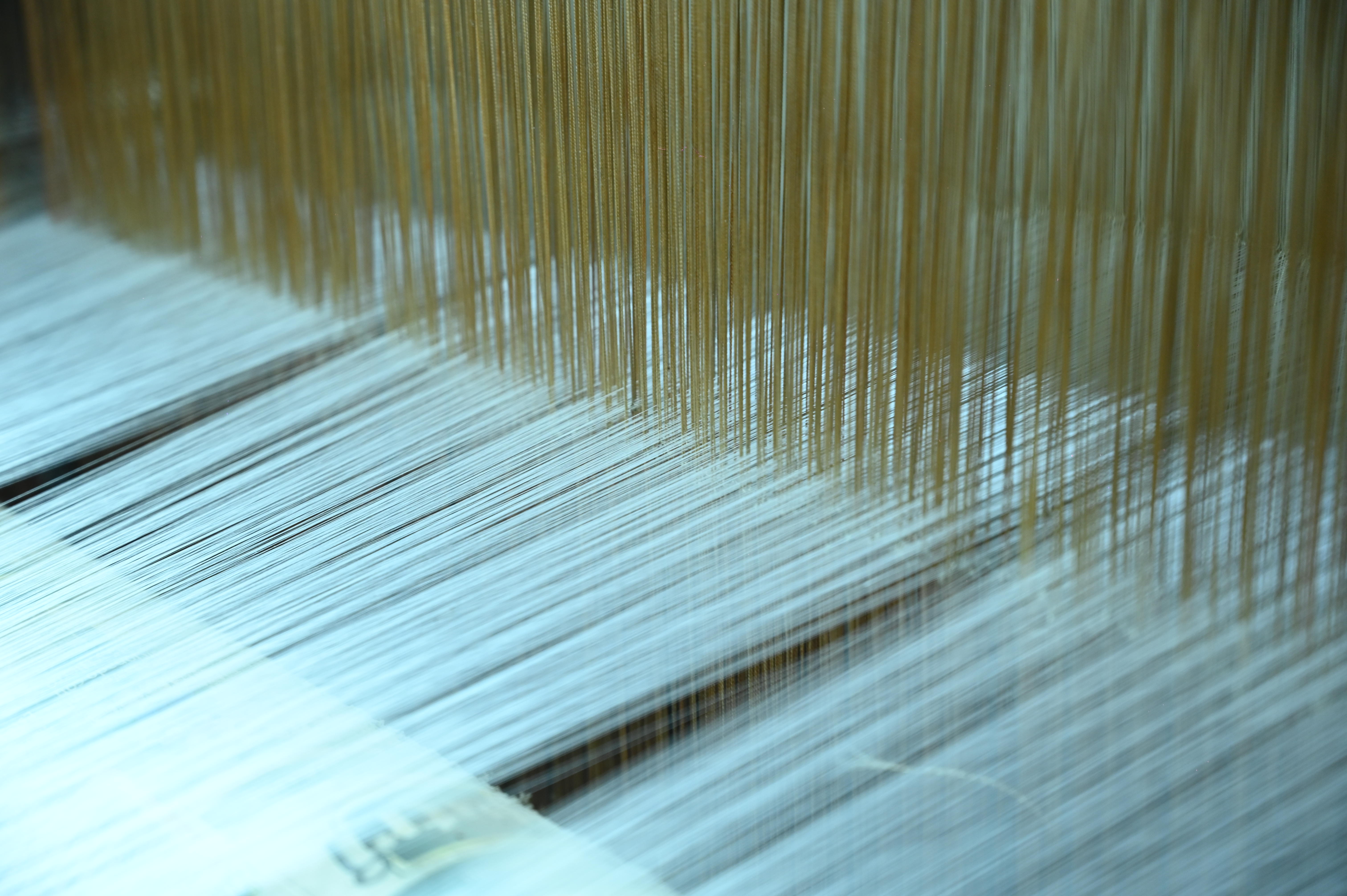
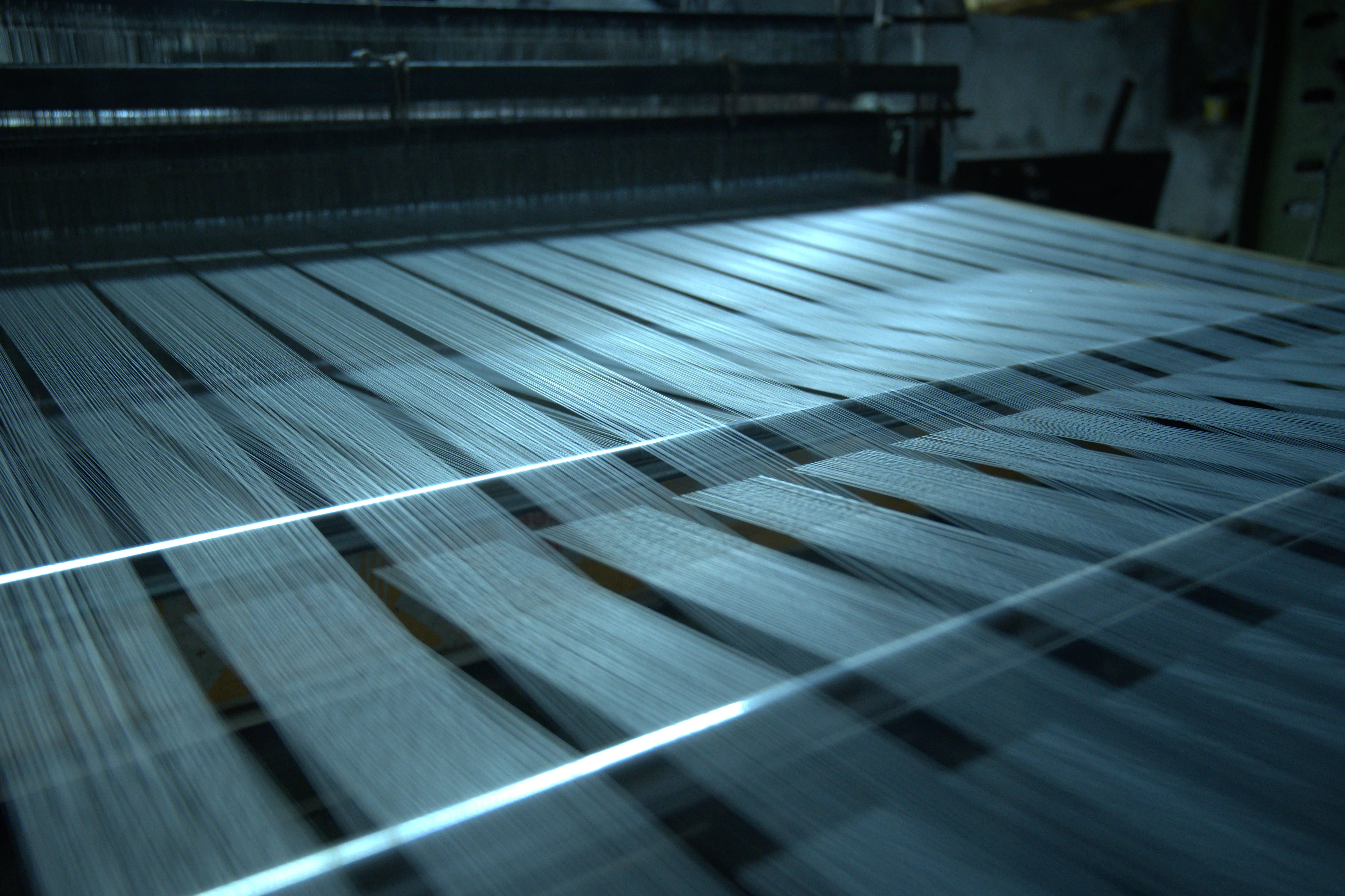
Thousands of silk threads are stretched lengthwise to form the warp. Each thread must carry equal tension. Even a small imbalance can disturb the final pattern. The weaver checks and adjusts this repeatedly before starting the weave.
For heavy and intricate sarees such as those in Katan Silk Banarasi Sarees, loom preparation itself can take several days.
4. Where the Saree Truly Takes Shape
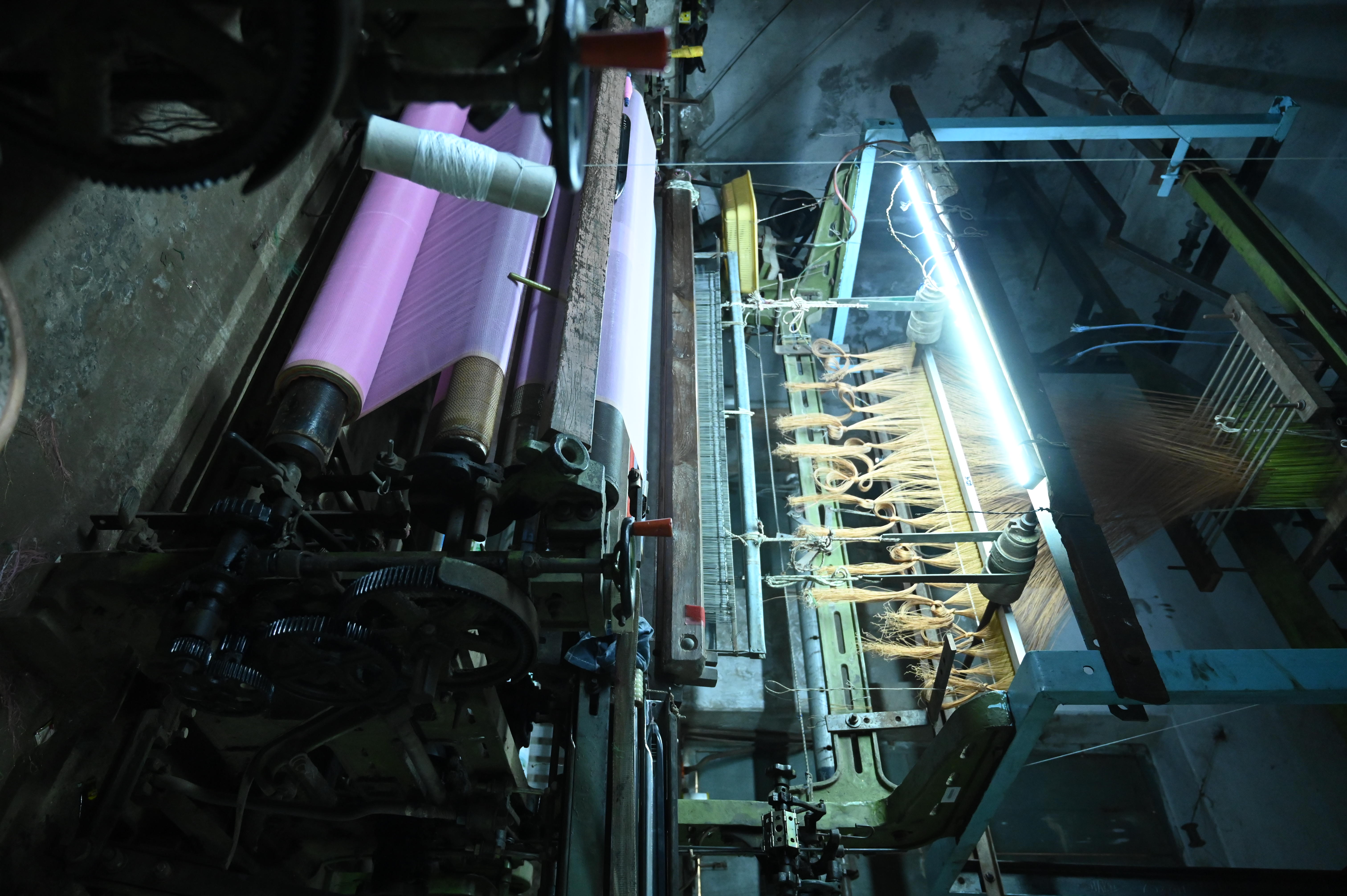
When the weaving begins, the saree finally starts becoming real.
The weaver works slowly, guiding each thread into its place. Some days the progress is steady. On others, it feels painfully slow. Depending on the design, a Banarasi saree can take anywhere from two weeks to several months to complete.
Two main techniques are used here.
With Kadwa weaving, each motif is woven separately. This produces sharper designs that last for decades. With Cutwork, the motifs are woven using continuous threads and trimmed later. It allows faster production but does not match Kadwa in durability.
For wedding sarees and heirloom pieces, Kadwa remains the preferred method.
5. Adding the Zari
Zari is the metallic thread that gives Banarasi sarees their identity. Traditionally made from silver and gold-coated threads, modern zari is carefully chosen for brightness, flexibility, and strength.
While weaving, the zari is introduced alongside silk. The coordination required here is intense. Both hands and feet move in rhythm. One small mistake can disturb the entire pattern.
6. Washing, Finishing, and Setting
Once weaving is complete, the saree is removed from the loom and washed to remove starch and impurities. It is then stretched and dried so the weave settles into its final form. Borders are reinforced, loose threads are secured, and the entire saree goes through final inspection.
This stage ensures the saree holds its shape, falls well, and maintains its finish over time.
7. How Buyers Can Judge Quality at Home
You do not need special tools to judge quality. Your senses are enough.
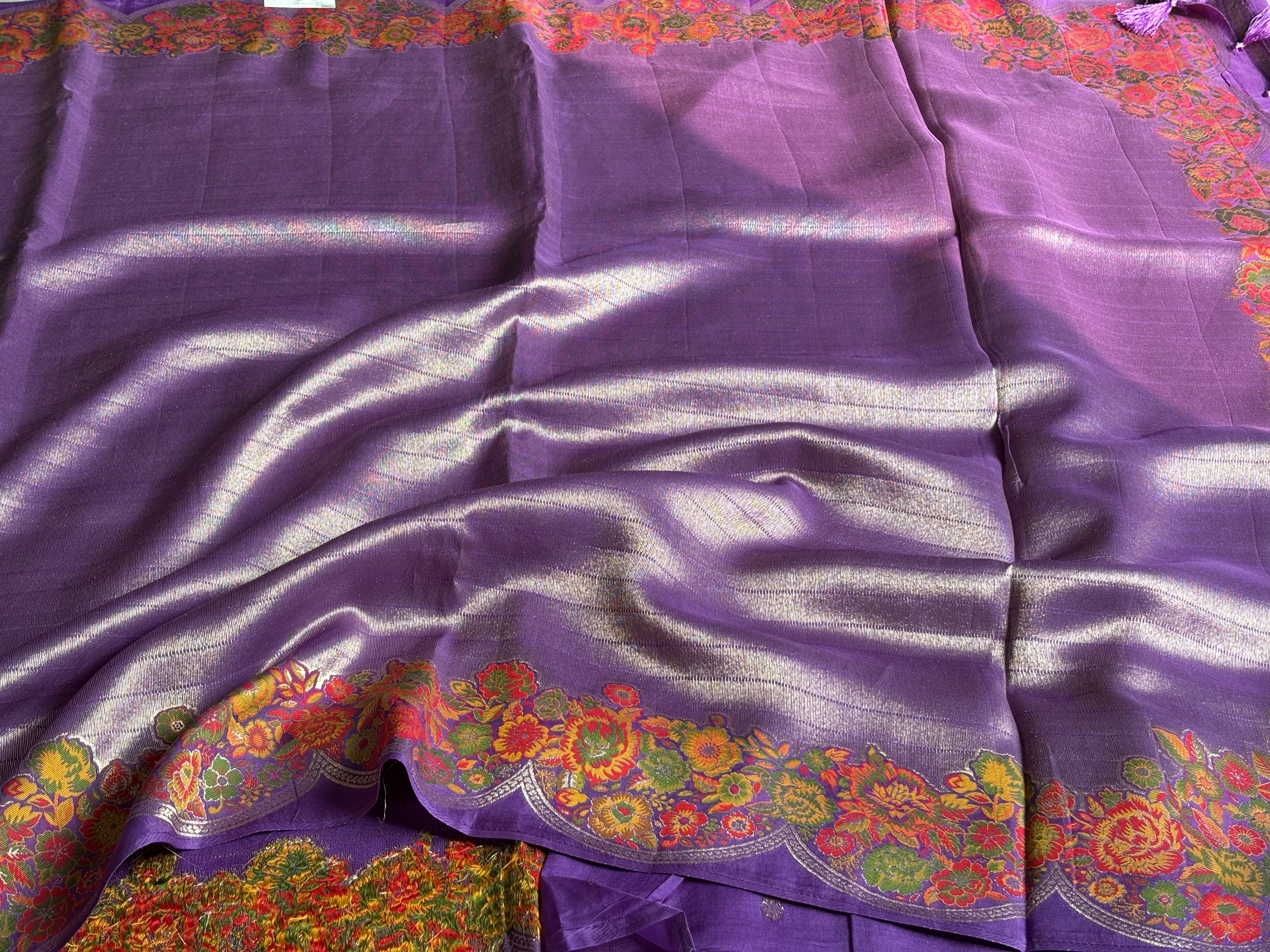
Visually, check that the motifs are sharp and clear, the borders align neatly, and the zari reflects light evenly.
By feel, the fabric should feel smooth but not slippery. The saree should have body, not limpness. Heavier pieces should feel balanced, not stiff.
Seeing different fabrics and styles together makes these differences easier to understand. Browsing the Loyal Sarees Catalog is often enough to train your eye.
8. Certifications and Identity
Original Banarasi sarees are supported by important certifications.
Silk Mark confirms the use of genuine natural silk.
Handloom Mark verifies that the saree is woven on a handloom.
GI Tag protects the identity of Banarasi sarees made in the Varanasi region.
These do not replace your judgment, but they provide another layer of confidence.
9. When Handwoven Banarasi Makes the Most Sense
Handwoven Banarasi sarees work best for weddings, major ceremonies, heirloom gifting, and long-term wardrobe investments.
For everyday wear or frequent travel, lighter weaves and simpler fabrics can be more practical.
Choosing the right type is about matching the saree to your life, not forcing every occasion into one category.
10. Care and Longevity
Good care protects decades of work.
Store sarees in soft cotton cloth.
Avoid hanging heavy pieces for long periods.
Keep them away from moisture and perfume.
Refold every few months to prevent deep crease lines.
With proper care, an original Banarasi saree can remain beautiful for generations.
Understanding the Craft Builds Confidence
When you understand how a Banarasi saree is made, you stop buying based only on labels or trends. You begin choosing based on knowledge.
If you would like to understand the deeper heritage behind this craft, you may enjoy reading The Story Behind Loyal Sarees: A Banarasi Weaving Legacy from Varanasi.
The goal is not to push a purchase.
The goal is to help you recognize quality when you see it.
When you choose with knowledge, you always choose better.
Ethnic Wear, Culture - Dec 20, 2022
Handloom Mark verifies that the saree is woven on a handloom.
GI Tag protects the identity of Banarasi sarees made in the Varanasi region.
Avoid hanging heavy pieces for long periods.
Keep them away from moisture and perfume.
Refold every few months to prevent deep crease lines.
The goal is to help you recognize quality when you see it.
Recent Post
April 4, 2025

April 4, 2025
April 4, 2025
.JPG)